
 Image 1 of 6
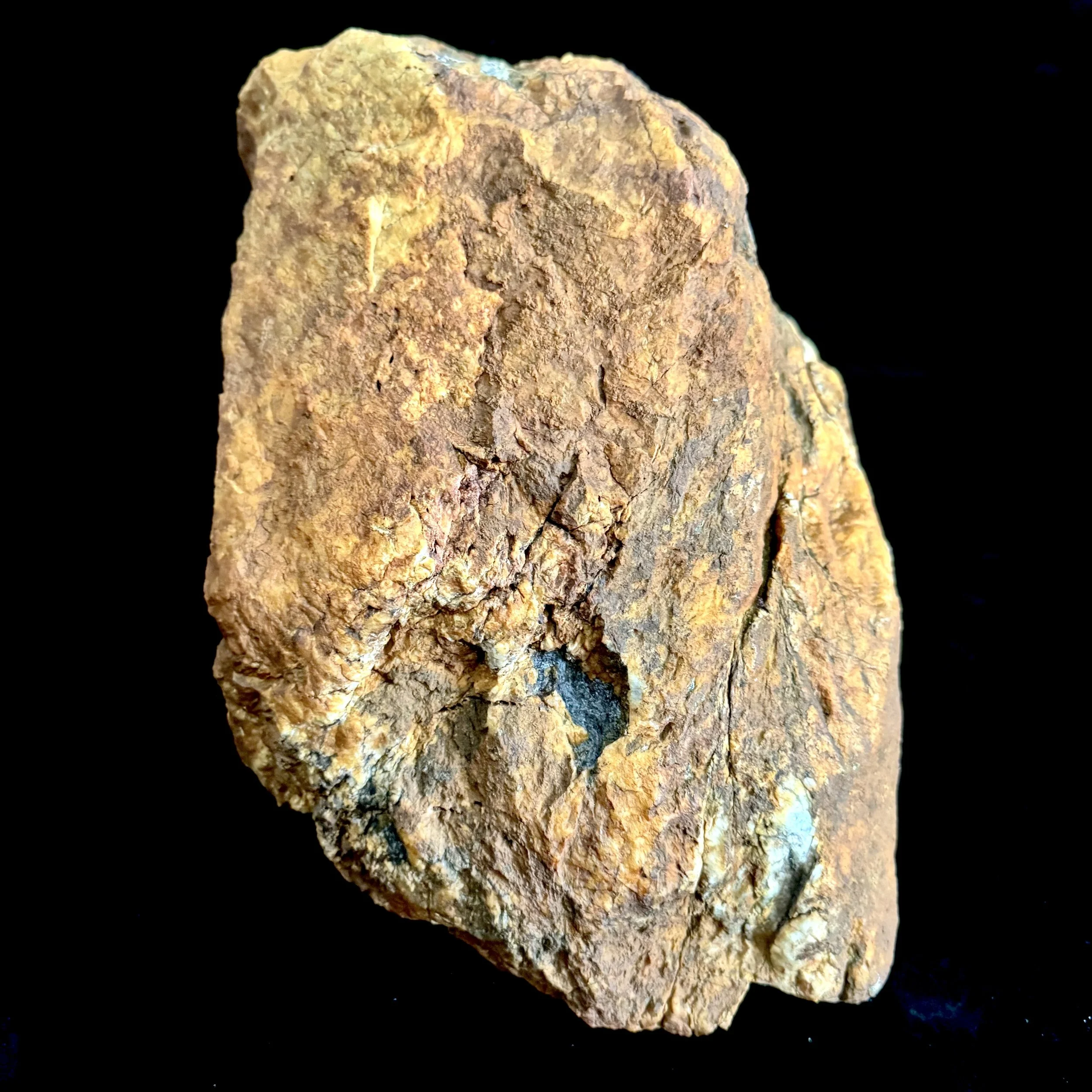 Image 2 of 6
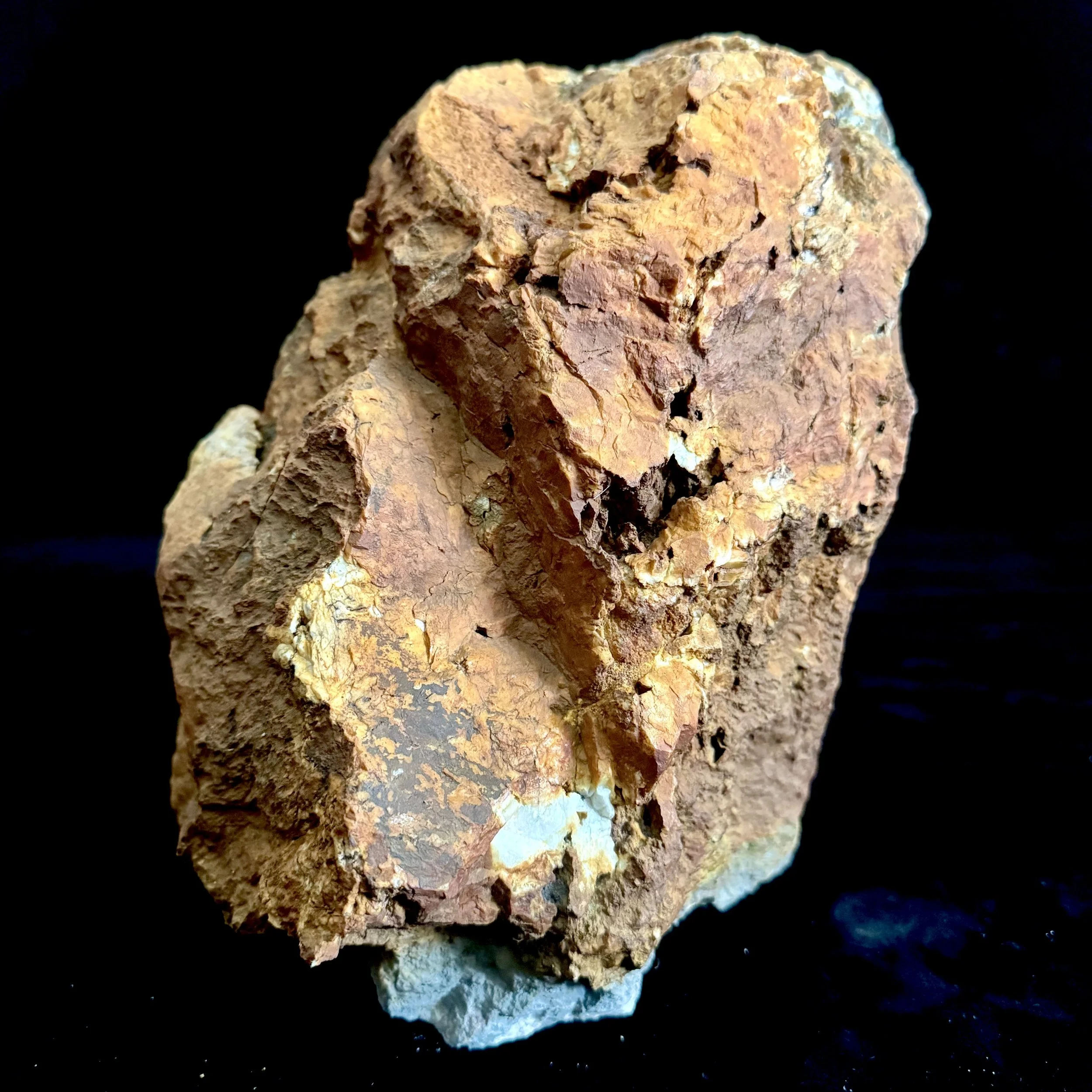 Image 3 of 6
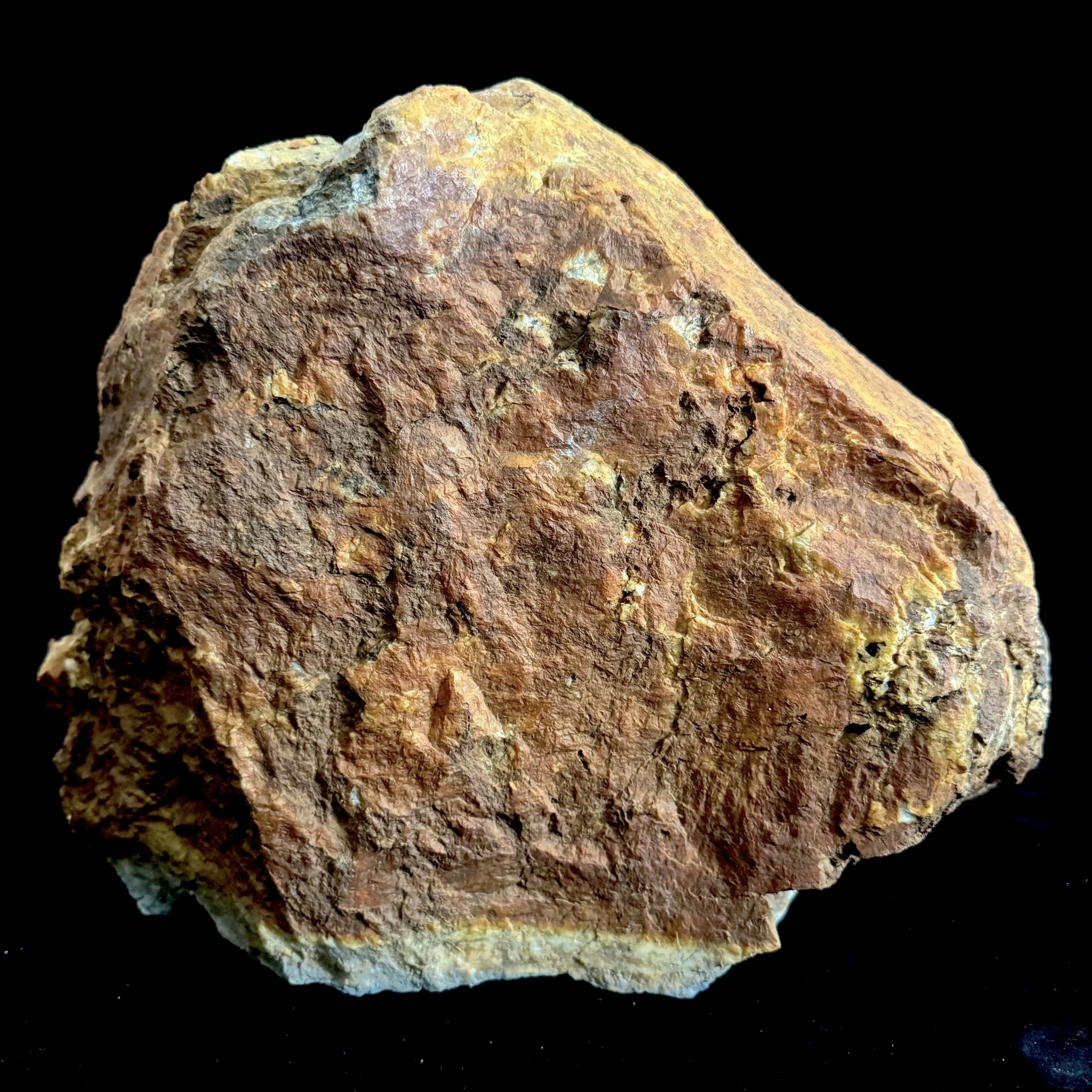 Image 4 of 6
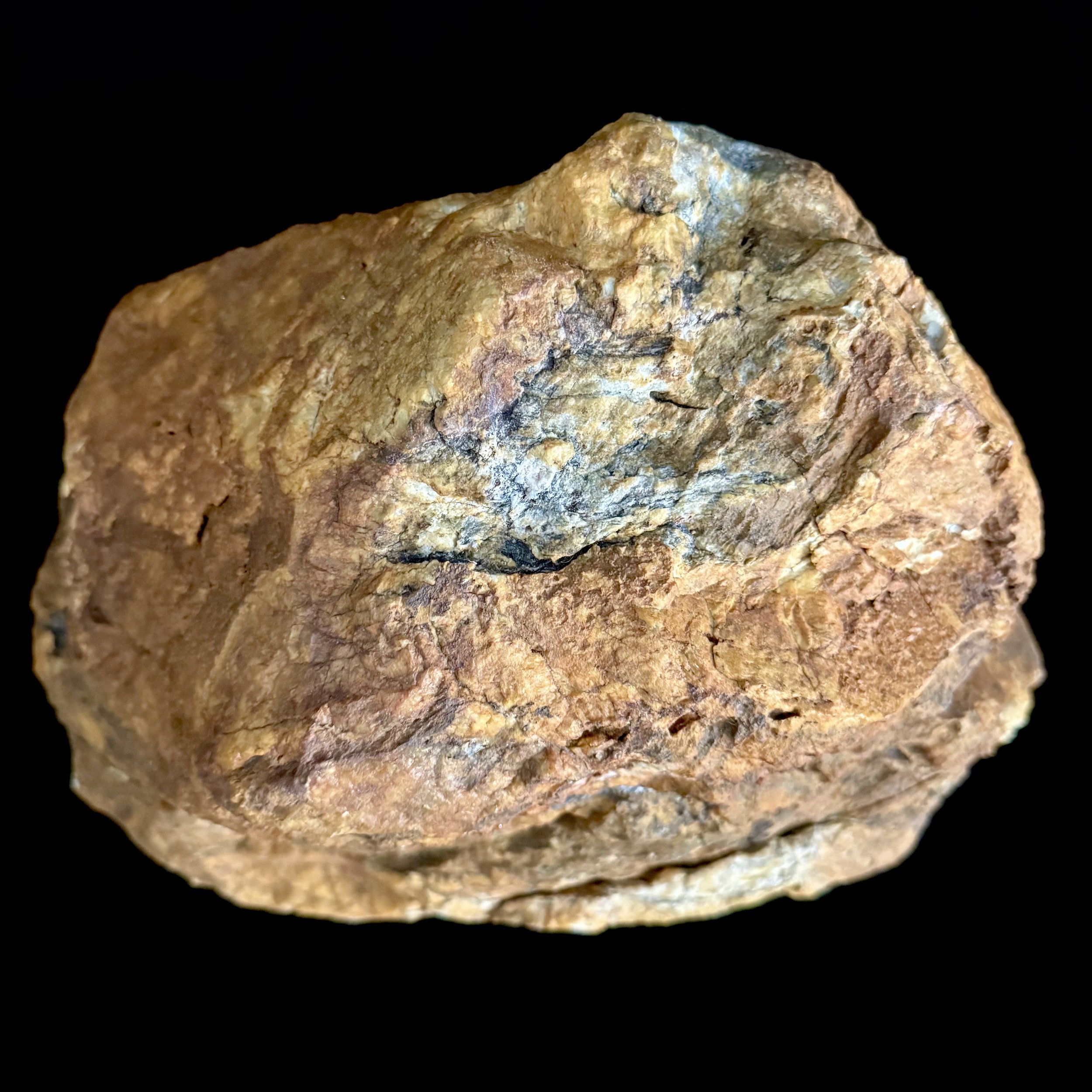 Image 5 of 6
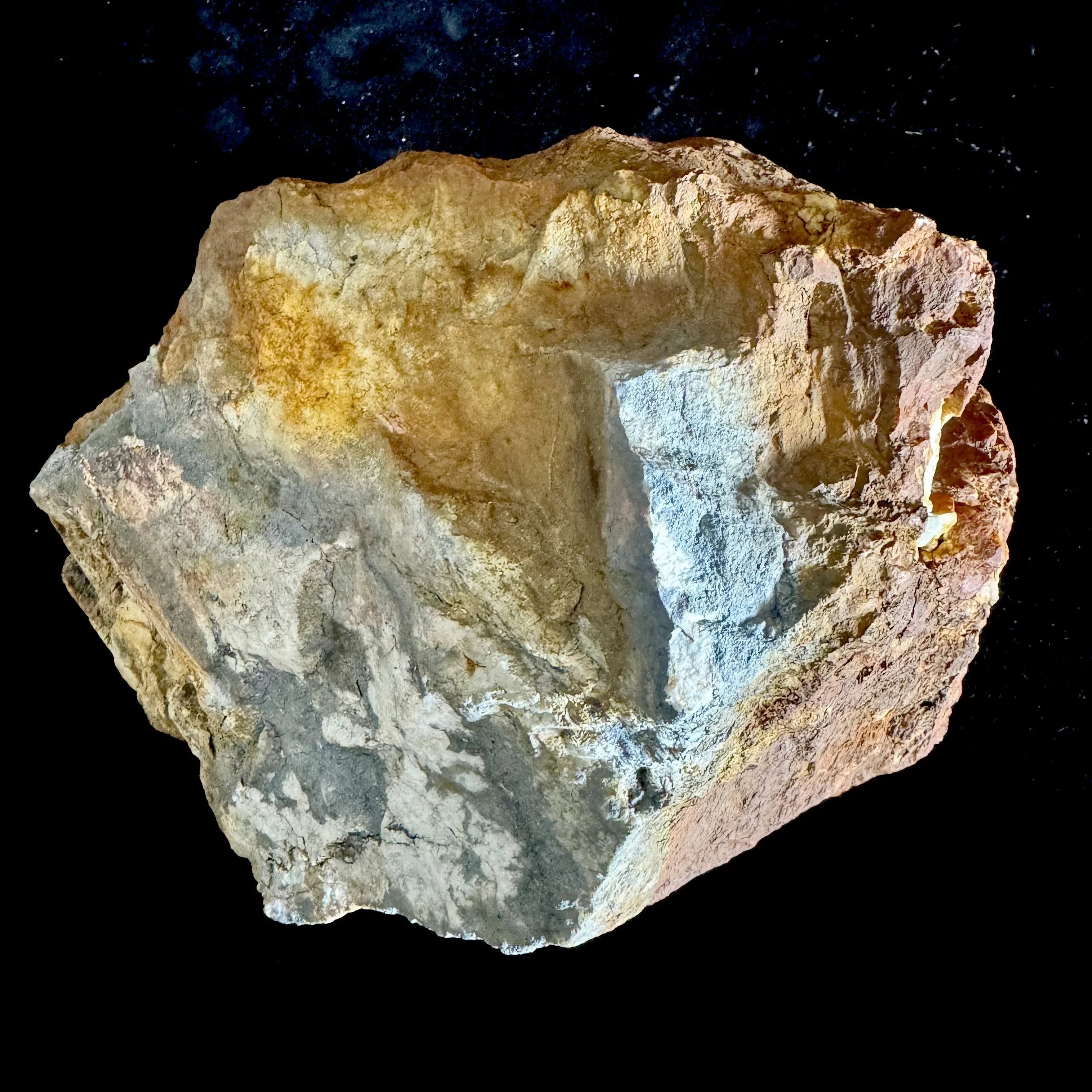 Image 6 of 6
The Primordial Ancient Mass Core
PRIMARY INFO
Codex No.: A00012
Codex Tier: Titan
Rarity Index: 8.5/10
(Non-repeatable natural formation)
Availability: One of One — No replication possible
CORE STATEMENT
The Primordial Core A00004 does not present itself immediately.
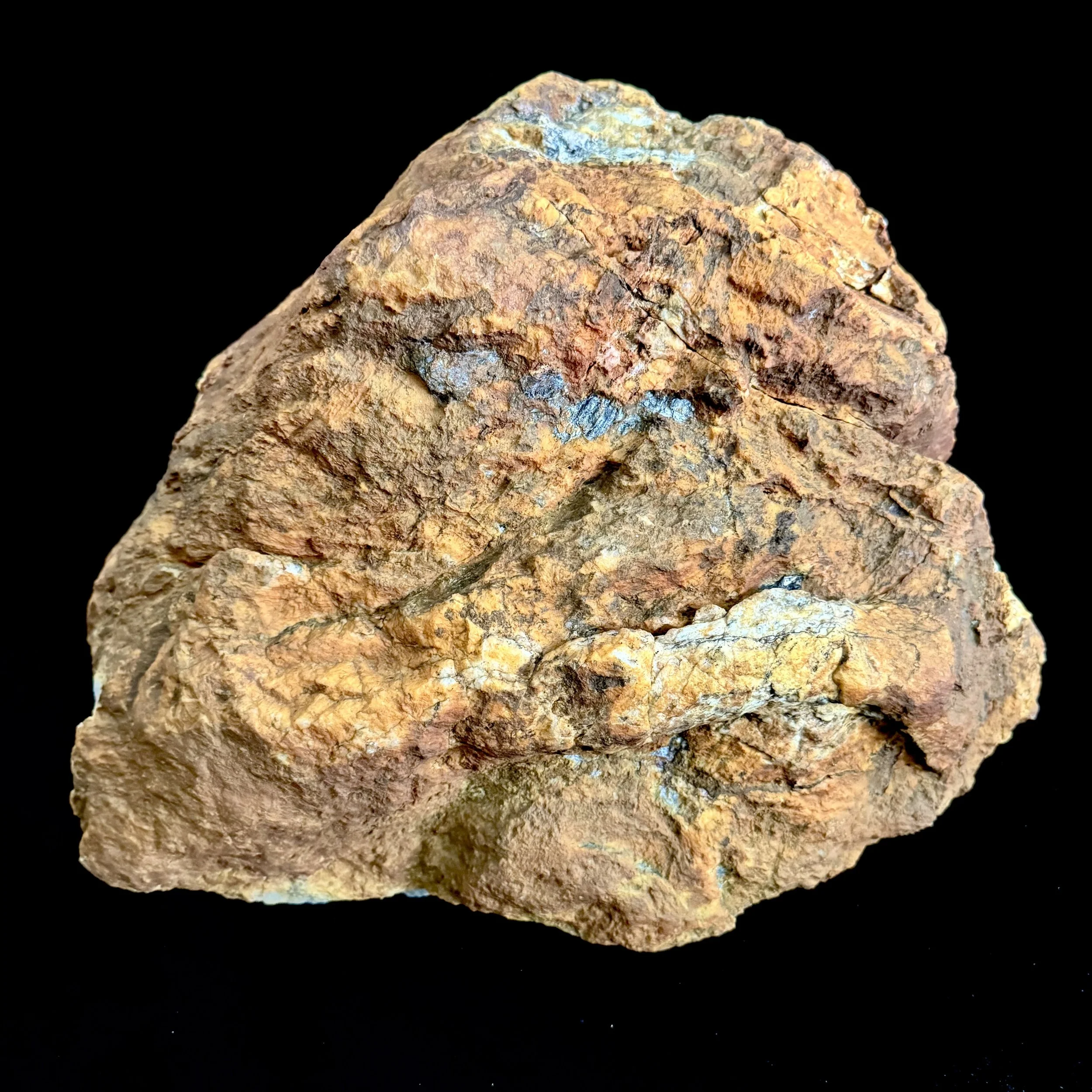
It appears as a dense, iron-dominant mass — compressed, weathered, and resistant.
Beneath the surface lies a structured internal system:
Quartz pathways, mineral veins, and pressure fractures formed over extended geological time.
This is not a display of clarity. This is a record of formation under pressure.
PHYSICAL SPECIFICATIONS
Weight: 26.208 kg
Dimension:
Width: 20.5 cm
Length: 37 cm
Height: 26 cm
ORIGIN
Source / Origin: Coastal mineral zone — Rayong, Thailand
Formation / Process: Formed through multi-phase mineral evolution involving quartz deposition, iron-rich hydrothermal intrusion, and prolonged surface oxidation.
Subsequent geological exposure introduced secondary alteration features, including localized blue-gray mineral transformation zones and micro-fracture crystallization.Era / Estimated Age: Millions of years (Exact dating undefined — classified as Primordial Natural Formation)
MATERIAL COMPOSITION
Iron Stained Quartz Matrix — Approx. 50–55%
Oxidized Mineral Crust (Heavy Iron Riched) — Approx. 20–25%
Subsurface Quartz Vein System — Approx. 12–18%
Blue-Grey Mineral Complex (Chlorite / Graphitic Carbon / Galena Indicative) — Approx. 3-5%
Secondary Micro-Druzy Silica — Approx. 2–3%
Residual Wethered Matrix & Clay — Approx. 4-6%
Quartz-dominant formation exhibiting multi-phase mineral evolution, including early-stage stabilized silicate zones later intruded by iron-rich hydrothermal activity. The presence of blue-gray mineral complexes suggests localized transformation under pressure, potentially involving carbonaceous or sulfide-associated phases. Secondary micro-druzy silica formation indicates late-stage crystallization within fracture cavities.
REMARK: Composition is visually estimated based on observable surface and structural characteristics. Laboratory confirmation not yet conducted.
ARTISTIC VALUE
Brutalist Nature — “Authentic Scarring”
This piece reflects a natural Brutalist condition. The fractured surfaces, hardened crust, and irregular geometry
are not imperfections. They are physical responses to force. Each mark is structural. Each break is evidence.Dormant Architecture — “A Library of Pressure”
This is not a uniform mass. It is a stored system of compression.
Internal fracture lines and mineral pathways act as natural records of stress, movement, and geological change.
What appears inactive is structurally defined.Blue-Gray Mineral Zones — “The Pulse of Transformation”
Distributed within the iron matrix are blue-gray inclusions — visually distinct and non-uniform.
These zones suggest chemical interaction during formation, where mineral conditions shifted over time.
They are rare within the collection. They mark transition, not stability.Natural Basin Formation
A concave cavity is present within the upper mass — forming a natural basin-like structure.
This is not surface damage, but a result of internal variation and structural release.Mass Presence — “ Gravitational Anchor “
At over 26 kg, A00012 carries physical authority. It does not elevate a space. It stabilizes it.
STRUCTURAL SCALE
Scale Classification: Large-Form Relic ( TITAN CLASS )
Formation Integrity:
Maintains strong structural cohesion across a complex quartz-dominant mass, despite visible fracture networks, layered oxidation, and mineral intrusion zones.
The integration of iron-rich crust, subsurface quartz veining, and stabilized mineral cores has reinforced internal integrity, allowing the formation to retain both mass and morphological presence without significant structural collapse.Rarity Factor (Scale):
Large-scale formations exhibiting this level of multi-phase mineral interaction are inherently unstable during geological evolution.
Processes such as oxidation, hydrothermal intrusion, and environmental exposure typically lead to fragmentation, erosion, or loss of structural definition.The preservation of:
Substantial mass
Layered quartz-vein architecture
Iron-rich oxidation crust
Localized blue-gray mineral anomaly zones
indicates a rare convergence of formation, transformation, and survival within a single intact structure.
Large formations rarely endure intact through multiple geological phases.
This one preserved not only its mass — but its entire evolutionary record.
MYTH
The exterior appears dense, weathered, and iron-bound. A surface shaped by pressure, oxidation, and time.
Beneath it — structure remains intact. Quartz holds. Form persists.
This formation reflects a deeper truth:
What endures is not what resists change — but what integrates it.
Energy Signature: Stability within transformation. Endurance through layered pressure. Clarity preserved beneath evolving structure.
Collector Note:
This artifact is not designed to impress. It is designed to remain. Best suited for collectors who recognize structural presence — and understand the value of forms that persist beyond surface change.
Anantakala Codex Note: A preserved core formation. A record of endurance across geological transition.
SPATIAL PRESENCE — “ATMOSPHERIC STABILIZER”
Visual Weight Displacement
Despite its substantial mass, the formation does not project heaviness.The contrast between dense iron-rich crust and internal quartz structure creates a perceptual shift —
where visual weight appears balanced rather than imposed.When positioned correctly:
The object does not sit in space. It stabilizes it.
When displayed correctly:
The object appears to float above its own foundationSpatial Role
Acts as a grounding anchor within an environment
Introduces subtle light interaction through mineral variation
Balances density and clarity within a single visual field
It does not demand attention through scale. It holds attention through presence.
DISPLAY & EXPERIENCE
Display Recommendation:
This piece is best experienced through controlled contrast. Its layered mineral system — iron-rich crust, quartz veins, and internal structures — reveals depth progressively under intentional lighting and spatial isolation.
It is not meant to blend. It is meant to be discovered.
Recommended Lighting
Use angled side or low directional lighting
Avoid full frontal illumination
Allow shadows to interact with surface irregularities
Effect:
Enhances separation between crust and internal quartz
Reveals depth across fracture lines and vein systems
Activates subtle reflective points within the structure
Light does not simply illuminate this piece. It reveals it in layers.
Display Environment
Dark or neutral base (stone, matte black, or natural wood)
Stable platform required (heavy-form structure)
Minimal surrounding objects recommended
Clarity emerges through contrast.
DISPLAY BASE
Not included. Custom base available upon request
PHOTOGRAPHY NOTE
Natural fractures, mineral layering, and oxidation patterns are present throughout the structure.
Surface textures remain raw and unaltered, preserving both crust formation and subsurface quartz expression.
No polishing, restoration, or artificial enhancement has been applied.
This piece is documented and presented in its original geological state.
CONDITION NOTE
Natural fractures and multi-phase mineral transitions are present.
Edges remain raw, with visible weathering and oxidation across exposed surfaces.
No structural modification, polishing, or artificial treatment has been performed.
The formation remains fully preserved in its natural condition.
TRUST / AUTHORITY
Authentication: Verified and documented by Anantakala Art — Codex Registered Artifact A00012
Curation Note:
Selected not for visual dominance alone — but for structural integrity and mineral convergence.
This piece represents a threshold condition:
Where layered formation, pressure, and transformation stabilize into a single enduring presence.
SHIPPING
Shipping available worldwide.
Freight arrangement upon request.
Due to the scale and weight of this artifact (26.208 kg), shipping will be coordinated individually to ensure safe handling and delivery.
HANDLING NOTE
This piece requires secure packing and proper lifting due to its mass. Custom packing solutions will be applied based on destination.
LOGISTICS CLARITY
Shipping cost is not included in the listed price. Final quotation will be provided based on location and delivery method.
FINAL STATEMENT
This is not a decorative object. This is a preserved geological convergence — where iron, quartz, and time have stabilized into a single enduring form. It does not resolve into simplicity. It holds complexity without collapse.
What appears chaotic is structured. What appears weathered is preserved.
This relic does not present itself at once. It reveals its structure — layer by layer, over time.
PRIMARY INFO
Codex No.: A00012
Codex Tier: Titan
Rarity Index: 8.5/10
(Non-repeatable natural formation)
Availability: One of One — No replication possible
CORE STATEMENT
The Primordial Core A00004 does not present itself immediately.
It appears as a dense, iron-dominant mass — compressed, weathered, and resistant.
Beneath the surface lies a structured internal system:
Quartz pathways, mineral veins, and pressure fractures formed over extended geological time.
This is not a display of clarity. This is a record of formation under pressure.
PHYSICAL SPECIFICATIONS
Weight: 26.208 kg
Dimension:
Width: 20.5 cm
Length: 37 cm
Height: 26 cm
ORIGIN
Source / Origin: Coastal mineral zone — Rayong, Thailand
Formation / Process: Formed through multi-phase mineral evolution involving quartz deposition, iron-rich hydrothermal intrusion, and prolonged surface oxidation.
Subsequent geological exposure introduced secondary alteration features, including localized blue-gray mineral transformation zones and micro-fracture crystallization.Era / Estimated Age: Millions of years (Exact dating undefined — classified as Primordial Natural Formation)
MATERIAL COMPOSITION
Iron Stained Quartz Matrix — Approx. 50–55%
Oxidized Mineral Crust (Heavy Iron Riched) — Approx. 20–25%
Subsurface Quartz Vein System — Approx. 12–18%
Blue-Grey Mineral Complex (Chlorite / Graphitic Carbon / Galena Indicative) — Approx. 3-5%
Secondary Micro-Druzy Silica — Approx. 2–3%
Residual Wethered Matrix & Clay — Approx. 4-6%
Quartz-dominant formation exhibiting multi-phase mineral evolution, including early-stage stabilized silicate zones later intruded by iron-rich hydrothermal activity. The presence of blue-gray mineral complexes suggests localized transformation under pressure, potentially involving carbonaceous or sulfide-associated phases. Secondary micro-druzy silica formation indicates late-stage crystallization within fracture cavities.
REMARK: Composition is visually estimated based on observable surface and structural characteristics. Laboratory confirmation not yet conducted.
ARTISTIC VALUE
Brutalist Nature — “Authentic Scarring”
This piece reflects a natural Brutalist condition. The fractured surfaces, hardened crust, and irregular geometry
are not imperfections. They are physical responses to force. Each mark is structural. Each break is evidence.Dormant Architecture — “A Library of Pressure”
This is not a uniform mass. It is a stored system of compression.
Internal fracture lines and mineral pathways act as natural records of stress, movement, and geological change.
What appears inactive is structurally defined.Blue-Gray Mineral Zones — “The Pulse of Transformation”
Distributed within the iron matrix are blue-gray inclusions — visually distinct and non-uniform.
These zones suggest chemical interaction during formation, where mineral conditions shifted over time.
They are rare within the collection. They mark transition, not stability.Natural Basin Formation
A concave cavity is present within the upper mass — forming a natural basin-like structure.
This is not surface damage, but a result of internal variation and structural release.Mass Presence — “ Gravitational Anchor “
At over 26 kg, A00012 carries physical authority. It does not elevate a space. It stabilizes it.
STRUCTURAL SCALE
Scale Classification: Large-Form Relic ( TITAN CLASS )
Formation Integrity:
Maintains strong structural cohesion across a complex quartz-dominant mass, despite visible fracture networks, layered oxidation, and mineral intrusion zones.
The integration of iron-rich crust, subsurface quartz veining, and stabilized mineral cores has reinforced internal integrity, allowing the formation to retain both mass and morphological presence without significant structural collapse.Rarity Factor (Scale):
Large-scale formations exhibiting this level of multi-phase mineral interaction are inherently unstable during geological evolution.
Processes such as oxidation, hydrothermal intrusion, and environmental exposure typically lead to fragmentation, erosion, or loss of structural definition.The preservation of:
Substantial mass
Layered quartz-vein architecture
Iron-rich oxidation crust
Localized blue-gray mineral anomaly zones
indicates a rare convergence of formation, transformation, and survival within a single intact structure.
Large formations rarely endure intact through multiple geological phases.
This one preserved not only its mass — but its entire evolutionary record.
MYTH
The exterior appears dense, weathered, and iron-bound. A surface shaped by pressure, oxidation, and time.
Beneath it — structure remains intact. Quartz holds. Form persists.
This formation reflects a deeper truth:
What endures is not what resists change — but what integrates it.
Energy Signature: Stability within transformation. Endurance through layered pressure. Clarity preserved beneath evolving structure.
Collector Note:
This artifact is not designed to impress. It is designed to remain. Best suited for collectors who recognize structural presence — and understand the value of forms that persist beyond surface change.
Anantakala Codex Note: A preserved core formation. A record of endurance across geological transition.
SPATIAL PRESENCE — “ATMOSPHERIC STABILIZER”
Visual Weight Displacement
Despite its substantial mass, the formation does not project heaviness.The contrast between dense iron-rich crust and internal quartz structure creates a perceptual shift —
where visual weight appears balanced rather than imposed.When positioned correctly:
The object does not sit in space. It stabilizes it.
When displayed correctly:
The object appears to float above its own foundationSpatial Role
Acts as a grounding anchor within an environment
Introduces subtle light interaction through mineral variation
Balances density and clarity within a single visual field
It does not demand attention through scale. It holds attention through presence.
DISPLAY & EXPERIENCE
Display Recommendation:
This piece is best experienced through controlled contrast. Its layered mineral system — iron-rich crust, quartz veins, and internal structures — reveals depth progressively under intentional lighting and spatial isolation.
It is not meant to blend. It is meant to be discovered.
Recommended Lighting
Use angled side or low directional lighting
Avoid full frontal illumination
Allow shadows to interact with surface irregularities
Effect:
Enhances separation between crust and internal quartz
Reveals depth across fracture lines and vein systems
Activates subtle reflective points within the structure
Light does not simply illuminate this piece. It reveals it in layers.
Display Environment
Dark or neutral base (stone, matte black, or natural wood)
Stable platform required (heavy-form structure)
Minimal surrounding objects recommended
Clarity emerges through contrast.
DISPLAY BASE
Not included. Custom base available upon request
PHOTOGRAPHY NOTE
Natural fractures, mineral layering, and oxidation patterns are present throughout the structure.
Surface textures remain raw and unaltered, preserving both crust formation and subsurface quartz expression.
No polishing, restoration, or artificial enhancement has been applied.
This piece is documented and presented in its original geological state.
CONDITION NOTE
Natural fractures and multi-phase mineral transitions are present.
Edges remain raw, with visible weathering and oxidation across exposed surfaces.
No structural modification, polishing, or artificial treatment has been performed.
The formation remains fully preserved in its natural condition.
TRUST / AUTHORITY
Authentication: Verified and documented by Anantakala Art — Codex Registered Artifact A00012
Curation Note:
Selected not for visual dominance alone — but for structural integrity and mineral convergence.
This piece represents a threshold condition:
Where layered formation, pressure, and transformation stabilize into a single enduring presence.
SHIPPING
Shipping available worldwide.
Freight arrangement upon request.
Due to the scale and weight of this artifact (26.208 kg), shipping will be coordinated individually to ensure safe handling and delivery.
HANDLING NOTE
This piece requires secure packing and proper lifting due to its mass. Custom packing solutions will be applied based on destination.
LOGISTICS CLARITY
Shipping cost is not included in the listed price. Final quotation will be provided based on location and delivery method.
FINAL STATEMENT
This is not a decorative object. This is a preserved geological convergence — where iron, quartz, and time have stabilized into a single enduring form. It does not resolve into simplicity. It holds complexity without collapse.
What appears chaotic is structured. What appears weathered is preserved.
This relic does not present itself at once. It reveals its structure — layer by layer, over time.